Bret Baier Reads Charles Krauthammer's Letter on Air
| Charles Krauthammer | |
|---|---|
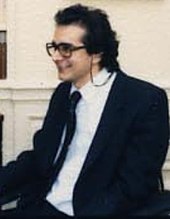 Krauthammer at the White House in 1986 | |
| Born | Irving Charles Krauthammer (1950-03-13)March 13, 1950 New York Metropolis, New York, U.S. |
| Died | June 21, 2018(2018-06-21) (aged 68) Atlanta, Georgia, U.S.[1] |
| Alma mater | McGill University (BA) Harvard University (Md) |
| Occupation |
|
| Years active | 1978–2018 |
| Employer |
|
| Spouse(s) | Robyn Trethewey (m. 1974) |
| Children | ane |
| Website | charleskrauthammer |
Charles Krauthammer (; March 13, 1950 – June 21, 2018) was an American political columnist. A conservative political pundit, Krauthammer won the Pulitzer Prize for his columns in The Washington Post in 1987. His weekly column was syndicated to more than than 400 publications worldwide.[3]
While in his first twelvemonth studying medicine at Harvard Medical School, Krauthammer became permanently paralyzed from the waist down afterward suffering a diving board accident that severed his spinal string at cervical spinal nerve five.[iv] Subsequently spending xiv months recovering in a hospital, he returned to medical schoolhouse, graduating to go a psychiatrist involved in the creation of the Diagnostic and Statistical Manual of Mental Disorders III in 1980.[five] [6] He joined the Carter administration in 1978 every bit a director of psychiatric research,[7] somewhen becoming the speechwriter to Vice President Walter Mondale in 1980.
In the tardily 1970s and early on 1980s, Krauthammer embarked on a career equally a columnist and political commentator. In 1985, he began writing a weekly column for The Washington Mail, which earned him the 1987 Pulitzer Prize for Commentary for his "witty and insightful columns on national issues."[8] He was a weekly panelist on the PBS news programme Inside Washington from 1990 until information technology ceased production in December 2013. Krauthammer had been a contributing editor to The Weekly Standard, a Fox News Channel contributor, and a nightly panelist on Flim-flam News Channel's Special Report with Bret Baier.
Krauthammer received acclaim for his writing on foreign policy, among other matters. He was a leading conservative voice and proponent of United States military and political engagement on the global phase, coining the term Reagan Doctrine and advocating both the Gulf War and the Iraq State of war.
In August 2017, due to his battle with cancer, Krauthammer stopped writing his column and serving as a Fox News correspondent. He died on June 21, 2018.[9]
Early on life and career [edit]
Krauthammer was born on March 13, 1950, in the New York City borough[10] of Manhattan.[v] His male parent, Shulim Krauthammer (November 23, 1904 – June 1987),[ citation needed ] was from Bolekhiv, Ukraine (then the Austro-Hungarian Empire), and later became a naturalized denizen of France.[eleven] [12] His mother, Thea (Horowitz), was from Antwerp, Belgium.[13] [14] The Krauthammer family was a Francophonic household.[xi] When he was v, the Krauthammers moved to Montreal. Through the schoolhouse twelvemonth, they resided in Montreal and spent the summers in Long Beach, New York.[15] [16] Both of his parents were Orthodox Jews, and he graduated from Herzliah High School.[11]
Krauthammer attended McGill University in Montreal, graduating in 1970 with first-form honours in economic science and political science.[17] At that fourth dimension, McGill University was a hotbed of radical sentiment, something that Krauthammer said influenced his dislike of political extremism. "I became very acutely aware of the dangers, the hypocrisies, and sort of the extremism of the political extremes. And information technology apple-pie me very early on in my political development of whatever romanticism." He later said: "I detested the farthermost Left and extreme Right, and found myself somewhere in the middle."[eighteen] The following year, after graduating from McGill, he studied as a Democracy Scholar in politics at Balliol Higher, Oxford, before returning to the Us to attend medical schoolhouse at Harvard.[ commendation needed ]
A diving blow during his beginning year of medical school left Krauthammer paralyzed from the waist down.[v] [6] [19] He remained with his Harvard Medical Schoolhouse class during his hospitalization, graduating in 1975. From 1975 through 1978, Krauthammer was a resident in psychiatry at Massachusetts General Hospital, serving equally chief resident his final year. During his time equally chief resident, he noted a variant of manic depression (bipolar disorder) that he identified and named secondary mania. He published his findings in the Archives of General Psychiatry.[20] He besides co-authored a path-finding study on the epidemiology of mania.[21]
In 1978, Krauthammer relocated to Washington, D.C., to directly planning in psychiatric inquiry nether the Carter administration.[3] He began contributing manufactures most politics to The New Republic and, in 1980, served as a speechwriter to Vice President Walter Mondale.[iii] He contributed to the tertiary edition of the Diagnostic and Statistical Manual of Mental Disorders. In 1984, he was board certified in psychiatry by the American Board of Psychiatry and Neurology.[22]
Career every bit columnist and political commentator [edit]

In 1979, Krauthammer joined The New Commonwealth as both a writer and editor.[2] [three] In 1983, he began writing essays for Time magazine, including one on the Reagan Doctrine, which first brought him national acclaim as a writer.[23] Krauthammer began writing regular editorials for The Washington Mail service in 1985 and became a nationally syndicated columnist. Krauthammer coined and developed the term Reagan Doctrine in 1985, and he divers the U.South. office as sole superpower in his essay "The Unipolar Moment", published shortly after the fall of the Berlin Wall in 1989.[24]
In 1990, Krauthammer became a panelist for the weekly PBS political roundtable Inside Washington, remaining with the show until it ceased product in December 2013. Krauthammer also appeared on Fox News Channel as a contributor for many years.[ citation needed ]
Krauthammer's 2004 speech "Democratic Realism", which was delivered to the American Enterprise Institute when Krauthammer won the Irving Kristol Award, set out a framework for tackling the postal service-9/11 earth, focusing on the promotion of commonwealth in the Eye Due east.[25]
In 2013, Krauthammer published Things That Matter: Three Decades of Passions, Pastimes and Politics. An immediate bestseller, the book remained on The New York Times bestseller list for 38 weeks and spent 10 weeks in a row at number 1.[26]
His son Daniel is responsible for the final edits on a book that was posthumously released, The Betoken of It All: A Lifetime of Great Loves and Endeavors, that was published in December 2018.
Awards and accolades [edit]
Krauthammer's New Republic essays won him the "National Magazine Honor for Essays and Criticism".[3] The weekly column he began writing for The Washington Post in 1985 won him the Pulitzer Prize for commentary in 1987.[27] On June 14, 1993, he was awarded the Honorary degree of Doctor of Letters from McGill University.[28]
In 1999, Krauthammer received the Gilt Plate Award of the American University of Accomplishment. His acceptance speech at the 1999 Summit in Washington, D.C., is included in his book, The Betoken of It All: A Lifetime of Keen Loves and Endeavors, published later on his decease.[29]
In 2006, the Financial Times named Krauthammer the most influential commentator in America,[23] stating that "Krauthammer has influenced US foreign policy for more than two decades."
In 2009, Politician columnist Ben Smith wrote that Krauthammer had "emerged in the Age of Obama as a key conservative voice, the kind of leader of the opposition that economist and New York Times columnist Paul Krugman represented for the left during the Bush years: a coherent, sophisticated and implacable critic of the new president."[30] In 2010, The New York Times columnist David Brooks said Krauthammer was "the most of import conservative columnist."[31] In 2011, former congressman and MSNBC host Joe Scarborough called him "without a incertitude the most powerful forcefulness in American conservatism. He has [been] for two, three, iv years."[32]
In a Dec 2010, press briefing, former president Beak Clinton – a Democrat – chosen Krauthammer "a brilliant man".[33] Krauthammer responded, tongue-in-cheek, that "my career is done" and "I'm toast."[34]
On September 26, 2013, Krauthammer received the William F. Buckley Honor for Media Excellence.[35]
Krauthammer'south other awards included the People for the American Way's First Subpoena Award, the Champion Media Award for Economic Agreement from Amos Tuck Schoolhouse of Business Administration,[36] the first almanac Bradley Prize, the 2002 "Mightier Pen" award from the Heart for Security Policy,[37] [38] the 2004 Irving Kristol Honor,[25] [39] and the 2009 Eric Breindel Award for Excellence in Stance Journalism,[40] an annual award given past the Eric Breindel Foundation.
Views and perspectives [edit]
Bioethics and medicine [edit]
Krauthammer was a supporter of abortion legalization (although he believed Roe five. Wade was wrongly decided) and opposed to euthanasia.[41] [42] [43]
Krauthammer was appointed to President George Westward. Bush-league'due south Council on Bioethics in 2002. He supported relaxing the Bush administration's limits on federal funding of discarded human embryonic stem prison cell enquiry.[44] Krauthammer supported embryonic stem jail cell enquiry using embryos discarded by fertility clinics with restrictions in its applications.[45] [46] [47] All the same, he opposed human cloning.[48] He warned that scientists were beginning to develop the power of "creating a class of superhumans". A fellow member of the Council, Janet D. Rowley, insists that Krauthammer's vision was still an outcome far in the future and not a topic to be discussed at the present time.[49]
In March 2009, Krauthammer was invited to the signing of an executive club by President Barack Obama at the White House but declined to attend because of his fears about the cloning of human embryos and the creation of normal man embryos solely for purposes of research. He also contrasted the "moral seriousness" of Bush-league'southward stem cell accost of Baronial ix, 2001, with that of Obama's address on stalk cells.[50]
Krauthammer was critical of the idea of living wills and the electric current state of end-of-life counseling and feared that Obamacare would just worsen the situation:
When my father was dying, my female parent and brother and I had to make up one's mind how much handling to pursue. What was a improve way to define my begetter'due south wishes: What he checked off on a form i fine summertime's day years earlier existence stricken; or what nosotros, who had known him intimately for decades, thought he would desire? The answer is obvious.[51]
Energy and global warming [edit]
Krauthammer was a longtime advocate of radically higher energy taxes to induce conservation.[52] [53] [54] [55]
Krauthammer wrote in The Washington Post on February twenty, 2014, "I'yard not a global warming believer. I'm not a global warming denier." Objecting to declaring global warming settled science, he contended that much that is believed to exist settled turns out not to exist so.[56]
Strange policy [edit]
Krauthammer first gained attention in the mid-1980s when he offset used the phrase "Reagan Doctrine" in his Time mag column.[57] The phrase was a reference to the American foreign policy of supporting anti-communist insurgencies effectually the globe (most notably Nicaragua, Angola, and Transitional islamic state of afghanistan) as a response to the Brezhnev Doctrine and reflected a U.South. foreign policy that went beyond containment of the Soviet Union to rollback of contempo Soviet influence in the 3rd World. The policy, which was strongly supported by Heritage Foundation strange policy analysts and other conservatives, was ultimately embraced by Reagan's senior national security and foreign policy officials. Krauthammer's description of it as the "Reagan Doctrine" has since endured.[ citation needed ]
In "The Poverty of Realism" (New Commonwealth, Feb 17, 1986), he asserted:
that the end of American strange policy is non only the security of the United States, simply what John F. Kennedy called "the success of freedom." That means, first, defending the community of democratic nations (the repository of the liberal thought) and second, encouraging the establishment of new liberal policies at the frontier, most especially in the Third World.
The foreign policy, he argued, should be both "universal in aspiration" and "prudent in application", thus combining American idealism and realism. Over the next 20 years these ideas adult into what is now called "autonomous realism."[ commendation needed ]
Following the Cold State of war, Krauthammer penned an article entitled "The Unipolar Moment".[24] Krauthammer coined the term unipolarity to describe the world structure that was emerging with the fall of the Soviet Union.[ citation needed ] Krauthammer predicted that the bipolar world of the Cold War would give fashion not to a multipolar world in which the U.S. was one of many centers of power, merely a unipolar earth dominated by the United states of america with a power gap between the nearly powerful land and the second most powerful state that would exceed any other in history. He also suggested that American hegemony would inevitably be for only a historical "moment" lasting at most three or four decades.[ citation needed ]
Hegemony gave the The states the capacity and responsibility to human action unilaterally if necessary, Krauthammer argued. Throughout the 1990s, notwithstanding, he was attentive about how that power ought to exist used. He carve up from his neoconservative colleagues who were arguing for an interventionist policy of "American greatness". Krauthammer wrote that in the absenteeism of a global existential threat, the U.s. should stay out of "teacup wars" in failed states, and instead adopt a "dry powder" foreign policy of nonintervention and readiness.[58] Krauthammer opposed purely "humanitarian intervention" (with the exception of overt genocide). While he supported the 1991 Gulf War on the grounds of both humanitarianism and strategic necessity (preventing Saddam Hussein from gaining control of the Persian Gulf and its resource), he opposed American intervention in the Yugoslav Wars on the grounds that America should not be committing the lives of its soldiers to purely humanitarian missions in which at that place is no American national interest at stake.[59]
Krauthammer's major 2004 monograph on foreign policy, "Autonomous Realism: An American Foreign Policy for a Unipolar World",[58] was critical both of the neoconservative Bush-league doctrine for being too expansive and utopian, and of foreign policy "realism" for being too narrow and immoral; instead, he proposed an alternative he called "Democratic Realism".
In a 2005 speech later published in Commentary magazine, Krauthammer called neoconservatism "a governing ideology whose time has come." He noted that the original "fathers of neoconservatism" were "onetime liberals or leftists." More recently, they take been joined past "realists, newly mugged by reality" such equally Condoleezza Rice, Richard Cheney, and George W. Bush, who "have given weight to neoconservatism, making it more various and, given the newcomers' past experience, more mature."[ citation needed ]
In a 2008 column entitled "Charlie Gibson's Gaffe", Krauthammer elaborated on the irresolute meanings of the Bush Doctrine in light of Gibson's questioning of Republican vice-presidential candidate Sarah Palin regarding what exactly the Bush Doctrine was, which resulted in criticism of Palin'southward response. Krauthammer states that the phrase originally referred to "the unilateralism that characterized the pre-9/xi first twelvemonth of the Bush-league administration," but elaborates, "There is no single meaning of the Bush doctrine. In fact, at that place have been 4 singled-out meanings, each i succeeding another over the eight years of this administration."[60]
Israel [edit]
Krauthammer strongly opposed the Oslo accords and said that Palestinian Liberation Organization leader Yasir Arafat would utilise the foothold it gave him in the West Banking concern and the Gaza Strip to continue the war against Israel that he had ostensibly renounced in the State of israel–Palestine Liberation System letters of recognition. In a July 2006 essay in Time, Krauthammer wrote that the Israeli–Palestinian conflict was fundamentally defined past the Palestinians' unwillingness to accept compromise.[61]
During the 2006 Lebanese republic State of war, Krauthammer wrote a column, "Allow Israel Win the War": "What other country, when attacked in an unprovoked assailment across a recognized international frontier, is then put on a countdown clock by the globe, given a express fourth dimension window in which to fight back, regardless of whether it has restored its own security?"[62] He later criticized Israeli prime minister Ehud Olmert'southward conduct, arguing that Olmert "has provided unsteady and uncertain leadership. Foolishly relying on air power alone, he denied his generals the ground offensive they wanted, merely to reverse himself after."[63]
Krauthammer supported a two-state solution to the conflict. Unlike many conservatives, he supported Israel's Gaza withdrawal as a step toward rationalizing the frontiers between Israel and a futurity Palestinian state. He believed a security barrier between the two states' final borders will exist an important element of any lasting peace.[64]
When Richard Goldstone retracted the claim ane+ 1⁄2 years afterwards the issuance of the UN study on the 2008 Gaza war that Israel intentionally killed Palestinian civilians,[65] including children, Krauthammer strongly criticized Goldstone, saying that "this weasel-y excuse-laden retraction is too lilliputian and as well belatedly" and called "the original report a claret libel ranking with the libels of the 19th century in which Jews were accused of ritually slaughtering children in order to utilize the blood in rituals." Krauthammer idea that Goldstone "should spend the rest of his life undoing the damage and changing and retracting that report."[66]
nine/11, Iraq, and the War on Terror [edit]
Krauthammer laid out the underlying principle of strategic necessity restraining autonomous idealism in his controversial 2004 Kristol Honor Lecture: "We volition support commonwealth everywhere, merely we will commit blood and treasure only in places where there is a strategic necessity—pregnant, places primal to the larger war confronting the existential enemy, the enemy that poses a global mortal threat to freedom."[58]
The 9/11 attacks, Krauthammer wrote, fabricated clear the new existential threat and the necessity for a new interventionism. On September 12, 2001, he wrote that, if the suspicion that bin Laden was behind the assault proved right, the United States had no choice only to go to state of war in Afghanistan.[67] He supported the Second Republic of iraq State of war on the "realist" grounds of the strategic threat the Saddam authorities posed to the region every bit UN sanctions were eroding and of his alleged weapons of mass destruction and on the "idealist" grounds that a self-sustaining democracy in Iraq would be a offset stride toward changing the poisonous political culture of tyranny, intolerance, and religious fanaticism in the Arab world that had incubated the anti-American extremism from which 9/xi emerged.[ citation needed ]
In Oct 2002, he presented what he believed were the principal arguments for and against the war, writing, "Hawks favor war on the grounds that Saddam Hussein is reckless, tyrannical, and instinctively ambitious, and that if he comes into possession of nuclear weapons in addition to the weapons of mass destruction he already has, he is probable to use them or share them with terrorists. The threat of mass death on a scale never earlier seen residing in the hands of an unstable madman is intolerable—and must exist preempted. Doves oppose war on the grounds that the risks exceed the gains. War with Republic of iraq could be very plush, perchance degenerating into urban warfare."
He continued: "I happen to believe that the preemption school is correct, that the risks of allowing Saddam Hussein to acquire his weapons volition only grow with fourth dimension. Nonetheless, I can both empathise and respect those few Democrats who brand the principled argument against war with Iraq on the grounds of deterrence, believing that condom lies in reliance on a proven (if perilous) rest of terror rather than the risky innovation of forcible disarmament past preemption."[68]
On the eve of the invasion, Krauthammer wrote, "Reformation and reconstruction of an alien culture are a daunting job. Risky and, yes, big-headed."[69] In February 2003, Krauthammer cautioned that "it may yet neglect. But we cannot beget not to attempt. There is not a single, remotely plausible, culling strategy for attacking the monster behind 9/11. Information technology's not Osama bin Laden; it is the cauldron of political oppression, religious intolerance, and social ruin in the Arab-Islamic world—oppression transmuted and deflected by regimes with no legitimacy into virulent, murderous anti-Americanism."[58] Krauthammer in 2003 wrote that the reconstruction of Iraq would provide many benefits for the Iraqi people, once the political and economical infrastructure destroyed by Saddam was restored: "With its oil, its urbanized center course, its educated population, its essential modernity, Iraq has a futurity. In two decades Saddam Hussein reduced its GDP past 75 percent. Once its political and industrial infrastructures are reestablished, Iraq'south potential for rebound, indeed for explosive growth, is unlimited."[lxx]
On April 22, 2003, Krauthammer predicted that he would have a "credibility problem" if weapons of mass devastation were non institute in Iraq within the next five months.[71]
In a speech to the Foreign Policy Association in Philadelphia, he argued that the ancestry of democratization in the Arab world had been met in 2006 with a "fierce counterattack" past radical Islamist forces in Lebanese republic, Palestine, and particularly Iraq, which witnessed a major intensification in sectarian warfare.[72] In late 2006 and 2007, he was one of the few commentators to support the troop surge in Iraq.[73] [74]
In 2009, Krauthammer argued that the use of torture against enemy combatants was impermissible except in two contexts: (a) when "[an] innocent's life is at pale," "[the] bad guy you have captured possesses data that could salvage this life, [and he] refuses to divulge"; and (b) when torture may lead to "the extraction of information from a loftier-value enemy in possession of high-value information probable to save lives".[75] [76] [77] [78]
Ideology [edit]
Meg Greenfield, editorial page editor for The Washington Postal service who edited Krauthammer's columns for 15 years, chosen his weekly column "independent and hard to peg politically. It's a very tough cavalcade. There's no 'trendy' in it. You never know what is going to happen next."[16] Hendrik Hertzberg, besides a former colleague of Krauthammer while they worked at The New Republic in the 1980s, said that when the 2 outset met in 1978, Krauthammer was "seventy percent Mondale liberal, 30 percent 'Scoop Jackson Democrat,' that is, hard-line on State of israel and relations with the Soviet Marriage"; in the mid-1980s, he was withal "50–50: adequately liberal on economic and social questions merely a total-bore strange-policy neoconservative." Hertzberg in 2009 chosen Krauthammer a "pretty solid 90–10 Republican."[79] Krauthammer was described by some equally having been a bourgeois.[fourscore] [81]
Presidential elections [edit]
A few days before the 2012 United States presidential ballot, Krauthammer predicted information technology would be "very close" with Republican candidate Mitt Romney winning the "popular [vote] by, I recall, about half a point, Electoral College probably a very narrow margin."[82] Although albeit his incorrect prediction, Krauthammer maintained, "Obama won only had no mandate. He won by going very minor, very negative."[83]
Before the 2016 presidential ballot, Krauthammer stated that "I volition non vote for Hillary Clinton, but, as I've explained in my columns, I could never vote for Donald Trump".[84]
In July 2017 following the release by Donald Trump Jr. of the email concatenation nigh the Trump Tower coming together on June nine, 2016, Krauthammer opined that even bungled bunco is even so collusion.[85] [86]
Faith [edit]
Krauthammer received a rigorous Jewish education. He attended a school where one-half the solar day was devoted to secular studies and half the 24-hour interval was devoted to religious education conducted in Hebrew. Past the fourth dimension he graduated from high schoolhouse at the age of sixteen, Krauthammer was able to write philosophical essays in Hebrew. His father demanded that he learn Talmud; in addition to his school'southward required Talmud studies, Krauthammer took actress Talmud classes iii days a week. This was not enough for his father who hired a rabbi to provide private didactics on the Talmud 3 nights a week.[11]
Krauthammer's zipper to Judaism was strengthened through his study of Maimonides at McGill University under Rabbi David Hartman. Krauthammer said, "I had discovered the world, and was going to go out all of this [Judaism] behind, because I was too sophisticated for information technology. So in my third year I took Hartman's course in Maimonides, and I'm thinking this is pretty serious stuff. It stands up to the Greeks, stands up to the philosophers of the age, and information technology gave me sort of a renewed delivery to and respect for my own tradition, which I already knew, but was prepare to throw away. And I didn't throw it away every bit a result of that meet."[11]
Krauthammer stated that "atheism is the least plausible of all theologies. I mean, in that location are a lot of wild ones out at that place, simply the one that clearly runs then contrary to what is possible, is disbelief".[87]
Krauthammer opposed the Park51 project in Manhattan for "reasons of mutual decency and respect for the sacred. No commercial belfry over Gettysburg, no convent at Auschwitz, and no mosque at Footing Zero. Build it anywhere merely there."[88]
Supreme Court nominations [edit]
Krauthammer criticized President George W. Bush-league'due south 2005 nomination of Harriet Miers to succeed Supreme Courtroom Justice Sandra Day O'Connor. He called the nomination of Miers a "mistake" on several occasions. He noted her lack of constitutional feel as the main obstacle to her nomination.[ citation needed ]
On October 21, 2005, Krauthammer published "Miers: The Only Get out Strategy",[89] in which he explained that all of Miers's relevant constitutional writings are protected by both attorney–customer privilege and executive privilege, which presented a unique face-saving solution to the fault: "Miers withdraws out of respect for both the Senate and the executive'south prerogatives."[xc] Six days later, Miers withdrew, employing that argument:
As I stated in my credence remarks in the Oval Function, the strength and independence of our three branches of authorities are critical to the continued success of this dandy Nation. Repeatedly in the course of the process of confirmation for nominees for other positions, I accept steadfastly maintained that the independence of the Executive Branch exist preserved and its confidential documents and information not be released to farther a confirmation process. I feel compelled to adhere to this position, especially related to my own nomination. Protection of the prerogatives of the Executive Branch and continued pursuit of my confirmation are in tension. I accept decided that seeking my confirmation should yield.[91]
The same mean solar day, NPR noted, "Krauthammer's scenario played out almost exactly as he wrote."[92] Columnist E. J. Dionne wrote that the White Firm was following Krauthammer's strategy "virtually to the letter".[93] A few weeks subsequently, The New York Times reported that Krauthammer's "go out strategy" was "exactly what happened" and that Krauthammer "had no prior inkling from the assistants that they were taking that route; he was later given credit for giving the Bush administration a plan."[94]
Other issues [edit]
Krauthammer was an opponent of capital penalisation,[95] [96] [97] [98] a critic of the intelligent design movement, and an abet of the scientific consensus on evolution; calling the religion–science controversy a "false disharmonize."[99] [100] In 2005, Krauthammer wrote several articles likening intelligent blueprint to "tarted-up creationism."[101]
In 2017, Krauthammer argued in favor of a border wall at the Mexico–United States border.[102]
Personal life [edit]
In 1974, Krauthammer married his wife, Robyn, a lawyer who stopped practicing law in guild to focus on her piece of work as an creative person. They had 1 kid, Daniel Krauthammer.[103] Krauthammer's blood brother, Marcel, died in 2006.[15]
Krauthammer was Jewish, but described himself as "not religious" and "a Jewish Shinto" who engages in "ancestor worship". At the aforementioned time, he was quite scornful of disbelief and was once quoted every bit maxim that of all the belief systems he was aware of, "the only one I know is Non true is disbelief." His beliefs were sometimes described every bit a version of the "ceremonial Deism" exhibited past some of the U.S. Founding Fathers, peculiarly Thomas Jefferson. He was also influenced by his study of Maimonides at McGill Academy with Rabbi David Hartman, the head of Jerusalem's Shalom Hartman Institute and professor of philosophy at McGill during Krauthammer'south educatee days.[104]
Krauthammer was a member of both the Chess Journalists of America[105] and the Council on Foreign Relations.[106] He was co-founder of Pro Musica Hebraica, a not-for-profit organisation devoted to presenting Jewish classical music, much of information technology lost or forgotten, in a concert hall setting.[107]
Expiry [edit]
In August 2017, Krauthammer had a cancerous tumor removed from his belly. The surgery was thought to have been successful; nonetheless, on June 8, 2018, Krauthammer announced that his cancer had returned and that doctors had given him simply weeks to live.[108] On June 21, he died of pocket-sized intestine cancer in an Atlanta, Georgia[1] infirmary. He was 68. Krauthammer was survived by his wife and son.
Works [edit]
- Cutting Edges: Making Sense of the Eighties (1988)
- Autonomous Realism: An American Strange Policy for a Unipolar World, (2004 speech)
- Things That Matter: 3 Decades of Passions, Pastimes and Politics (2013)
- The Point of It All: A Lifetime of Great Loves and Endeavors (with Daniel Krauthammer), Crown Forum, 2018 [109]
References [edit]
- ^ a b Roberts, Sam (June 21, 2018). "Charles Krauthammer, Prominent Conservative Voice, Dies at 68". The New York Times. Archived from the original on June 22, 2018. Retrieved June 22, 2018.
- ^ a b Heer, Jeet (June 21, 2018). "Charles Krauthammer was a crucial New Commonwealth voice for near a quarter century. RIP". The New Republic. Archived from the original on June 22, 2018. Retrieved June 22, 2018.
- ^ a b c d east "Charles Krauthammer" (PDF). Harry Walker Agency. Archived from the original (PDF) on September 16, 2017. Retrieved June 26, 2018.
- ^ "The freak accident that changed Charles Krauthammer'southward life". Play tricks News. October 25, 2013. Archived from the original on April 12, 2018. Retrieved April 12, 2018.
- ^ a b c Interview Archived June 14, 2018, at the Wayback Machine with Brian Lamb on C-Span, May ane, 2005.
- ^ a b Hall, Carolo (August 17, 1984). "Don't Telephone call It Courage". The Washington Mail service. Archived from the original on July 30, 2017. Retrieved July 29, 2017.
- ^ Van Sant, Shannon (June 9, 2018). "Columnist Charles Krauthammer Says He Has Just Weeks To Live". NPR. Archived from the original on June 23, 2018. Retrieved June 22, 2018.
- ^ O'Connor, Lydia (June 21, 2018). "Fox News Pundit Charles Krauthammer Expressionless At 68". Huffington Mail. Archived from the original on June 23, 2018. Retrieved June 22, 2018.
- ^ Stelter, Brian (June 8, 2018). "Charles Krauthammer says he has 'only a few weeks left to live'". CNN. Archived from the original on June 8, 2018. Retrieved June viii, 2018.
- ^ Bernstein, Adam (June 21, 2018). "Charles Krauthammer, Pulitzer Prize-winning columnist and intellectual provocateur, dies at 68". The Washington Post. Archived from the original on June 22, 2018. Retrieved June 21, 2018.
- ^ a b c d eastward "Charles Krauthammer on Conversations with Bill Kristol". Conversationswithbillkristol.org. Retrieved June 21, 2018.
- ^ "Nativity tape of Shulim Krauthammer". Archived from the original on June 12, 2018. Retrieved June 29, 2018.
- ^ "Play a joke on News contributor Charles Krauthammer passes away". Israel National News. Archived from the original on June 24, 2018. Retrieved June 29, 2018.
- ^ "Charles Krauthammer, Prominent Conservative Voice, Dies at 68". Archived from the original on June 24, 2018. Retrieved June 29, 2018.
- ^ a b Krauthammer, Charles (January 27, 2006). "Marcel, My Blood brother". The Washington Post. Archived from the original on December 25, 2015. Retrieved December 24, 2015.
- ^ a b Charles Krauthammer bio Archived October 29, 2013, at the Wayback Machine from The Washington Post Writers Grouping. Retrieved October 26, 2013.
- ^ Elizabeth A. Brennan; Elizabeth C. Clarage (1999). Who'due south who of Pulitzer Prize Winners. Greenwood Publishing Group. p. 63. ISBN978-1-57356-111-2 . Retrieved November xvi, 2014.
- ^ "Charles Krauthammer on Conversations with Beak Kristol". Conversationswithbillkristol.org. Archived from the original on June 2, 2016. Retrieved May 27, 2016.
- ^ "Trump Teases Critic for Being Paralyzed". Daily Animal. 2015. Archived from the original on May 5, 2018. Retrieved June 22, 2018.
- ^ Krauthammer, C.; Klerman, G. L. (1978). "Secondary mania: manic syndromes associated with antecedent physical illness or drugs". Archives of General Psychiatry. 35 (11): 1333–1339. doi:10.1001/archpsyc.1978.01770350059005. PMID 757997. Archived from the original on May xi, 2011. Retrieved February xviii, 2007.
- ^ C. Krauthammer and Thou. L. Klerman. "The Epidemiology of Mania", in Manic Affliction, ed. B. Shopsin, New York: Raven Printing, 1979.
- ^ Wood, Tom (November 21, 2008). "The Higher Backgrounds of America's Leading Paper Opinion Columnists". National Clan of Scholars. Archived from the original on July 6, 2010. Retrieved September 27, 2009.
- ^ a b Barber, Lionel (May xx, 2006). "Views of the world". Fiscal Times. Archived from the original on June 29, 2009.
- ^ a b Krauthammer, Charles (1991). "The Unipolar Moment". Foreign Affairs. Vol. 70, no. 1. New York: Council on Foreign Relations. pp. 23–33. doi:ten.2307/20044692. JSTOR 20044692. Archived from the original on June 22, 2018. Retrieved June 22, 2018.
- ^ a b Menand, Louis (March 27, 2006). "Breaking Abroad". The New Yorker. Vol. 82, no. 6. p. 82. Archived from the original on June 26, 2018. Retrieved June 26, 2018.
- ^ "The New York Times Best Sellers". Archived from the original on May xv, 2016. Retrieved June 29, 2018.
- ^ "The Pulitzer Prizes 1987 Winners and Finalists". The Pulitzer Prizes. Archived from the original on June 16, 2012. Retrieved July 9, 2012.
- ^ (PDF). March 17, 2017 https://web.archive.org/spider web/20170317144411/https://world wide web.mcgill.ca/senate/files/senate/honorary_degree_recipients_alpha_list_updated_nov._2016.pdf. Archived from the original (PDF) on March 17, 2017. Retrieved June 29, 2018.
- ^ "Gilded Plate Awardees of the American Academy of Achievement". www.achievement.org. American Academy of Accomplishment.
- ^ Doherty, Brian. "Obama's biggest critic: Krauthammer". Politico. Archived from the original on July 16, 2016. Retrieved May 27, 2016.
- ^ "Barack Obama'south biggest critic: Charles Krauthammer". politico.com. Archived from the original on Feb 9, 2010. Retrieved March x, 2010.
- ^ "Is GOP extremism is the problem with United states of america politics?". MSNBC. Archived from the original on Oct 6, 2013. Retrieved August 8, 2011.
- ^ Balz, Dan (December xi, 2010). "Bill Clinton takes the White House phase, over again". The Washington Mail . Retrieved December 11, 2010.
- ^ "Charles Krauthammer Responds To Clinton'south "Bright" Praise: "I'm Toast"". mediaite.com. December 11, 2010. Archived from the original on October 11, 2012. Retrieved March ix, 2013.
- ^ "Charles Krauthammer Accepts William F. Buckley Accolade for Media Excellence". CNS News. Archived from the original on September 27, 2013. Retrieved September 27, 2013.
- ^ A., Brennan, Elizabeth (1999). Who's who of Pulitzer Prize winners . Clarage, Elizabeth C. Phoenix, Ariz.: Oryx Press. pp. 63. ISBN1573561118. OCLC 40126493.
- ^ "2002 Mightier Pen Award: Charles Krauthammer". Middle for Security Policy. September 5, 2002. Archived from the original on June 26, 2018. Retrieved June 26, 2018.
- ^ Cox, Christopher (October 7, 2002). "Tribute to Dr. Charles Krauthammer" (PDF). Extensions of Remarks. Congressional Record. Washington: 107th Congress, 2nd session. 148 (130): e1769–e1770. Archived (PDF) from the original on April 12, 2019. Retrieved June 26, 2018.
- ^ "Charles Krauthammer to Receive 2004 Irving Kristol Award". AEI Newsletter. American Enterprise Constitute. November 1, 2003. Retrieved June 26, 2018.
- ^ "The Washington Post Writers Group". Postwritersgroup.com. March 24, 2005. Archived from the original on December xviii, 2010. Retrieved March 10, 2010.
- ^ "Giuliani'due south Abortion 'Gaffe'" Archived October v, 2017, at the Wayback Machine past Charles Krauthammer, The Washington Post, May 11, 2007.
- ^ "Roe v. Roberts" Archived February 25, 2017, at the Wayback Motorcar by Charles Krauthammer, The Washington Post, September 16, 2005.
- ^ "Federalism'southward New Friends" Archived August 16, 2007, at the Wayback Car by Charles Krauthammer, The Washington Mail service, November 8, 1999.
- ^ "Prison cell Lines, Moral Lines; Research Should Expand—With a Primal Limit" Archived August 17, 2017, at the Wayback Motorcar by Charles Krauthammer, The Washington Mail service, Friday, August 5, 2005.
- ^ "Stem Cell Miracle?" Archived December 24, 2017, at the Wayback Machine by Charles Krauthammer The Washington Post, Jan 12, 2007.
- ^ "Cell Lines, Moral Lines" Archived August 17, 2017, at the Wayback Auto by Charles Krauthammer The Washington Post, August 5, 2005.
- ^ "Enquiry Cloning? No." Archived August eleven, 2018, at the Wayback Auto past Charles Krauthammer, The Washington Mail, May x, 2002.
- ^ Krauthammer: "The Great Stem Cell Hoax" by Charles Krauthammer, The Weekly Standard, August xiii, 2001.
- ^ "Bush-league's Directorate on Ideals Discuss Human Cloning" Archived August 18, 2016, at the Wayback Machine past Sheryl Gay Stolberg, The New York Times, January 18, 2002.
- ^ "Obama's 'Scientific discipline' Fiction" Archived September xix, 2012, at annal.today by Charles Krauthammer, The Washington Postal service, March 13, 2009.
- ^ Krauthammer, Charles (August 21, 2009). "The Truth About Death Counseling". The Washington Post. Archived from the original on November 8, 2012. Retrieved August 21, 2009.
- ^ "The Oil-Bust Panic" by Charles Krauthammer, The New Commonwealth, Feb 21, 1983.
- ^ "Pump Some Seriousness Into Energy Policy" Archived Oct half dozen, 2017, at the Wayback Machine by Charles Krauthammer, The Washington Post, November 11, 2005.
- ^ "Free energy Independence?" Archived August 10, 2017, at the Wayback Machine past Charles Krauthammer, The Washington Post, Jan 26, 2007.
- ^ "The Tax-Free Lunch" Archived Oct 6, 2017, at the Wayback Machine by Charles Krauthammer, The Washington Post, June 29, 2007.
- ^ Krauthammer, Charles (Feb 20, 2014). "The myth of 'settled scientific discipline'". The Washington Post. Archived from the original on February 24, 2014. Retrieved February 24, 2014.
- ^ The Reagan Doctrine Archived Feb 9, 2008, at the Wayback Motorcar by Charles Krauthammer, Time magazine, Apr 1, 1985.
- ^ a b c d Democratic Realism Archived August 30, 2007, at the Wayback Machine by Charles Krauthammer, American Enterprise Institute, February 2004.
- ^ The Path to Putin Archived August 15, 2007, at the Wayback Car by Charles Krauthammer, The Washington Post, April iii, 2000.
- ^ "Charlie Gibson'south Gaffe" Archived February 13, 2011, at the Wayback Auto By Charles Krauthammer, The Washington Mail, September 13, 2008.
- ^ Krauthammer, Charles (July 10, 2006). "Call back What Happened Here". Time. Vol. 168, no. 2. p. 76. Archived from the original on Apr 30, 2009. Retrieved September 6, 2009.
- ^ "Let Israel Win the War" Archived December 18, 2007, at the Wayback Machine by Charles Krauthammer, www.realclearpolitics.com, July 28, 2006.
- ^ Krauthammer, Charles (August 4, 2006). "Israel's Lost Moment". The Washington Mail. Archived from the original on May fifteen, 2011. Retrieved April 28, 2010.
- ^ Chester, Alexander (Apr 19, 2004; updated Baronial 12, 2009) "Yeshiva Students Attend Wexner Memorial Lecture, Krauthammer Draws Tremendous Crowd". Archived from the original on December half dozen, 2009. Retrieved October 27, 2013.
{{cite spider web}}: CS1 maint: bot: original URL status unknown (link). The Commentator. at spider web.archive.org.. Retrieved October 26, 2013. - ^ Bronner, Ethan; Kershner, Isabel (April 2, 2011). "Richard Goldstone Regrets Saying Israel Purposely Killed Gazans". The New York Times. Archived from the original on June 19, 2017. Retrieved August 25, 2017.
- ^ "Bourgeois Commentator Charles Krauthammer Dead at 68". The Jewish Press. June 22, 2018. Archived from the original on October 28, 2019. Retrieved October 28, 2019.
- ^ "This Is Non a Offense, This is War" Archived September 30, 2007, at the Wayback Machine by Charles Krauthammer, The Washington Post, September 12, 2001.
- ^ "What Good Is Delay?" Archived February 15, 2007, at the Wayback Machine past Charles Krauthammer, Jewish Globe Review, October 7, 2002.
- ^ Krauthammer, Charles (Feb 17, 2003). "Coming Ashore". Time. Vol. 161, no. 7. p. 37. Archived from the original on January eight, 2012. Retrieved September 6, 2009.
- ^ Krauthammer, Charles (September 19, 2003). "Democrats and Nation-Edifice". The Washington Post. Archived from the original on September 19, 2008. Retrieved July 20, 2007.
- ^ Chapman, Steve (October 26, 2003). "Bush faces credibility showdown". Chicago Tribune. Chicago Tribune Company, LLC. Archived from the original on May 8, 2015. Retrieved Apr 22, 2014.
- ^ Past the Apogee Archived Dec vi, 2016, at the Wayback Machine by Charles Krauthammer, Foreign Policy Research Institute, December 2006.
- ^ "In Baker's Corrigendum, a Hazard for Bush" Archived March 2, 2017, at the Wayback Machine by Charles Krauthammer, The Washington Post, December 5, 2006.
- ^ "The Surge: Offset Fruits" Archived September fifteen, 2012, at archive.today by Charles Krauthammer, The Washington Post, April 13, 2007.
- ^ "Archived copy". Archived from the original on December 16, 2018. Retrieved Jan 27, 2019.
{{cite web}}: CS1 maint: archived re-create as championship (link) - ^ "Charles Krauthammer was the anti-Breitbart conservative author". Vox. Archived from the original on June 22, 2018. Retrieved June 22, 2018.
- ^ "Charles Krauthammer." Gimmicky Authors Online, Gale, 2014. Biography In Context. Accessed 22 June 2018.
- ^ Italie | AP, Hillel (June 22, 2018). "Charles Krauthammer, conservative columnist and pundit, dies". The Washington Post. ISSN 0190-8286. Archived from the original on June 22, 2018. Retrieved June 22, 2018.
- ^ Herzberg, Hendrik (March 2, 2009). "Krauthammer Then and Now". The New Yorker. Archived from the original on March 9, 2009. Retrieved March 18, 2009.
- ^ Beinart, Peter (April 30, 2006). "The Rehabilitation of the Common cold-War Liberal". The New York Times. Archived from the original on May 12, 2011. Retrieved August 31, 2008.
- ^ Nib, Steigerwald (May 29, 2004). "So, what is a 'neocon'?". Pittsburgh Tribune. Archived from the original on February xv, 2009. Retrieved April viii, 2009.
- ^ "Hannity (segment)". FNC Video. Foxnews.com. November iii, 2012. Archived from the original on May 11, 2013. Retrieved May 7, 2013.
- ^ "Krauthammer: Obama Won, But Has No Mandate | 2012 Presidential Election | Fox Nation". Nation.foxnews.com. Nov 7, 2012. Archived from the original on March 28, 2013. Retrieved March 9, 2013.
- ^ "My vote, explained". The Washington Postal service. October xx, 2016. Archived from the original on October 21, 2016. Retrieved March 26, 2018.
- ^ "Krauthammer calls it 'bunco'". CNN Money. July xiv, 2017. Archived from the original on April x, 2018. Retrieved March 26, 2018.
- ^ "Bungled bunco is still collusion". The Washington Post. July 13, 2017. Archived from the original on June 9, 2018. Retrieved March 26, 2018.
- ^ Burk, Denny. "The Theology of Charles Krauthammer". Archived from the original on Jan 15, 2014. Retrieved January 13, 2014.
- ^ Krauthammer, Charles (Baronial 12, 2010). "Build the mosque anywhere but Footing Zero". New York Daily News. Archived from the original on Baronial 19, 2010. Retrieved Oct vii, 2010.
- ^ "Miers: The Merely Exit Strategy" Archived October 10, 2017, at the Wayback Automobile past Charles Krauthammer, The Washington Mail service, Oct 12, 2006.
- ^ "Commentary – An Exit Strategy for the Miers Debacle by Charles Krauthammer". RealClearPolitics. October 21, 2005. Archived from the original on January ix, 2010. Retrieved March 10, 2010.
- ^ "Text of Miers's Letter to President Bush" Archived Oct fourteen, 2016, at the Wayback Machine White Business firm.
- ^ "Conservative Columnist's Miers Programme Played Out" Archived March 10, 2018, at the Wayback Machine NPR.
- ^ "Conservatives Will Regret the Miers Withdrawal" Archived May 16, 2008, at the Wayback Car E.J. Dionne.
- ^ Kornblut, Anne E. (December 11, 2005). "He Says Yes to Legalized Torture". The New York Times. Archived from the original on Jan 1, 2013. Retrieved August 16, 2018.
- ^ "Silent Executions", by Charles Krauthammer, The Washington Postal service, June fourteen, 1985.
- ^ "The Court is Just Doing its Job" past Charles Krauthammer, The Washington Post, June 30, 1989.
- ^ "Without the Noose, Without the Gag" by Charles Krauthammer, The Washington Postal service, April 24, 1992.
- ^ "Sparing Moussaoui for the wrong reasons" Archived September 18, 2012, at annal.today by Charles Krauthammer, The Washington Post, May 12, 2006.
- ^ "Phony Theory, False Disharmonize" Archived October 17, 2017, at the Wayback Machine past Charles Krauthammer, The Washington Post, Nov 18, 2005.
- ^ Krauthammer, Charles (August 8, 2005). "Let's Accept No More Monkey Trials". Time. Vol. 166, no. 6. p. 78. Archived from the original on May 24, 2009. Retrieved September half-dozen, 2009.
- ^ "Phony Theory, False Disharmonize; 'Intelligent Blueprint' Foolishly Pits Evolution Against Religion" Archived October 17, 2017, at the Wayback Machine by Charles Krauthammer, The Washington Mail, November 18, 2005.
- ^ Schwartz, Ian (June 19, 2017). "Krauthammer Gives Prager U Commentary: Build The Wall". RealClearPolitics . Retrieved June 21, 2021.
- ^ "Q&A with Charles Krauthammer". C-SPAN. April 22, 2005. Archived from the original on November viii, 2014. Retrieved November 16, 2014.
- ^ "The unfashionable Charles Krauthammer". The Jerusalem Postal service. October 6, 2009. Archived from the original on Oct 29, 2013. Retrieved Apr 20, 2014.
- ^ "The Washington Post News Media Services". Postwritersgroup.com. Archived from the original on December 18, 2010. Retrieved March ix, 2013.
- ^ "Membership Roster – Council on Foreign Relations". cfr.org. Archived from the original on February 12, 2013. Retrieved March 9, 2013.
- ^ "Charles Krauthammer, Pro Musica Hebraica". Promusicahebraica.org. Retrieved March 9, 2013.
- ^ Krauthammer, Charles (June 8, 2018). "Opinion | A note to readers". The Washington Mail. ISSN 0190-8286. Archived from the original on June 8, 2018. Retrieved June 8, 2018.
- ^ "Franceis P. Sempa in The New York Periodical of Books". Dec 4, 2018. Archived from the original on December 15, 2018. Retrieved Dec eleven, 2012.
External links [edit]
- Column archives in The Washington Post
- Column archives at Jewish Globe Review
- Biography at The Washington Postal service Writers Grouping website
- "Democratic Realism: An American Foreign Policy for a Unipolar Earth" – 2004 Speech
- By the Apogee: America Under Pressure – 2006 Speech
- Charles Krauthammer at IMDb
- Works by or most Charles Krauthammer in libraries (WorldCat catalog)
- Appearances on C-Span
- Interview with Charles Krauthammer on C-Bridge Q&A, Apr 22, 2005
- Charles Krauthammer at Notice a Grave
kleinschmidtmong1940.blogspot.com
Source: https://en.wikipedia.org/wiki/Charles_Krauthammer
0 Response to "Bret Baier Reads Charles Krauthammer's Letter on Air"
إرسال تعليق